
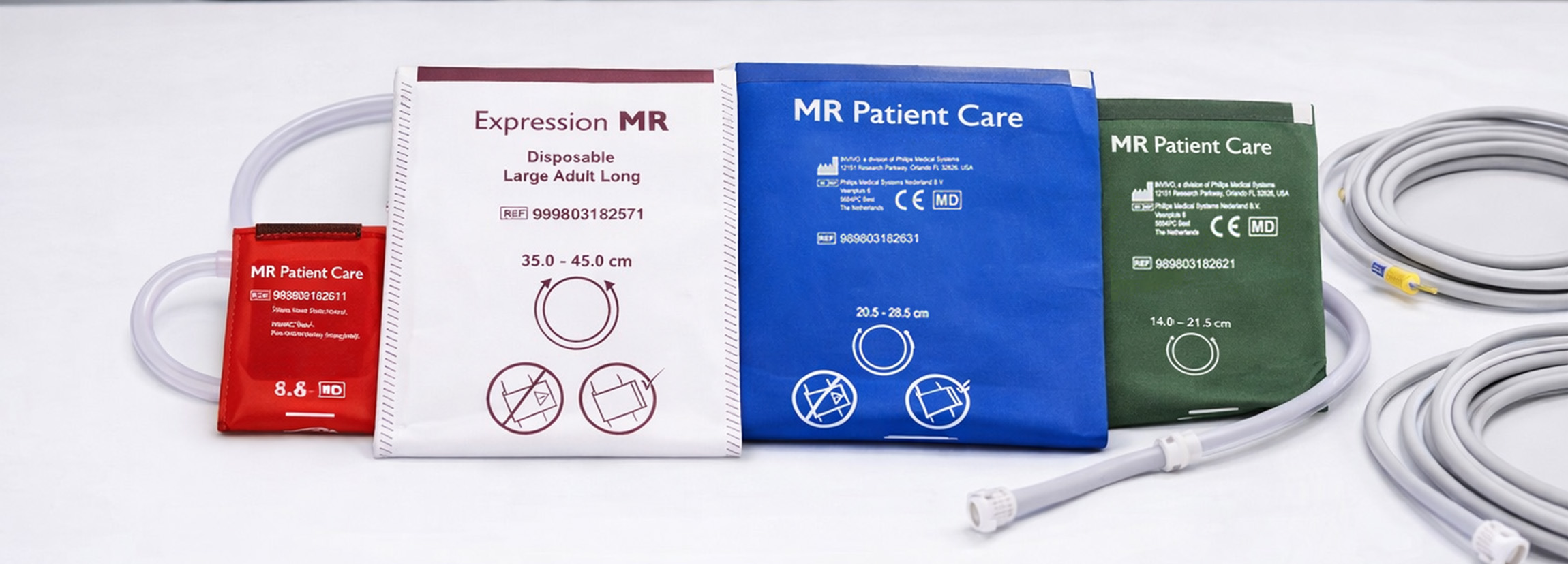
The Philips Expression MR400 Patient Monitoring System is designed to provide a complete range of physiological monitoring capabilities within the MRI environment. While parameters such as ECG and SpO₂ are commonly associated with continuous patient monitoring, blood pressure measurement remains equally important in assessing patient condition before, during, and after an MRI examination.
To support this requirement, the MR400 incorporates a fully integrated Non-Invasive Blood Pressure (NIBP) monitoring system that allows clinicians to perform both single blood pressure measurements and automated interval-based monitoring. Combined with Philips’ range of MRI-compatible blood pressure cuffs and accessories, the MR400 provides a reliable solution for obtaining blood pressure measurements safely within the MRI suite.
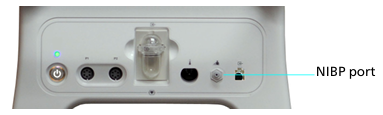
What Is Non-Invasive Blood Pressure Monitoring?
Blood pressure is one of the most fundamental physiological parameters monitored in healthcare. Unlike invasive blood pressure monitoring, which requires a catheter and pressure transducer to obtain measurements directly from the vascular system, Non-Invasive Blood Pressure (NIBP) monitoring uses an inflatable cuff to estimate blood pressure without penetrating the body.
During a measurement cycle, the cuff inflates to temporarily occlude blood flow before gradually deflating. The monitor analyses pressure changes within the cuff and calculates the patient’s systolic blood pressure, diastolic blood pressure, and Mean Arterial Pressure (MAP).
Because NIBP monitoring is non-invasive, easy to perform, and suitable for a wide range of patient populations, it remains one of the most commonly used methods of assessing cardiovascular status during routine and procedural patient monitoring.
Why MRI-Compatible Blood Pressure Accessories Matter
The MRI environment presents unique safety challenges that are not present in conventional clinical settings. The powerful magnetic field generated by the MRI scanner means that all equipment introduced into the scan room must be specifically designed and certified for MRI use.
The Philips MR400 utilises proprietary MRI-compatible blood pressure cuffs that have been designed for safe operation within the MRI environment. These cuffs are clearly identified with the appropriate MRI compatibility markings, allowing clinical staff to quickly verify that the correct accessories are being used.
Using approved MRI-compatible cuffs is essential for patient safety. Conventional blood pressure cuffs may contain materials, clips, or components that are not suitable for use near the MRI scanner. By ensuring only approved MR400 accessories are used, healthcare facilities can minimise risk while maintaining compliance with MRI safety protocols.
A Comprehensive Range of Cuff Options
One of the strengths of the MR400 NIBP system is the extensive range of blood pressure cuff sizes available to support a wide variety of patient populations.
Whether monitoring neonatal, paediatric, or adult patients, clinicians can select a cuff that is appropriately sized for the individual patient. Correct cuff selection is critical for obtaining accurate blood pressure readings, as an incorrectly sized cuff can significantly affect measurement accuracy.
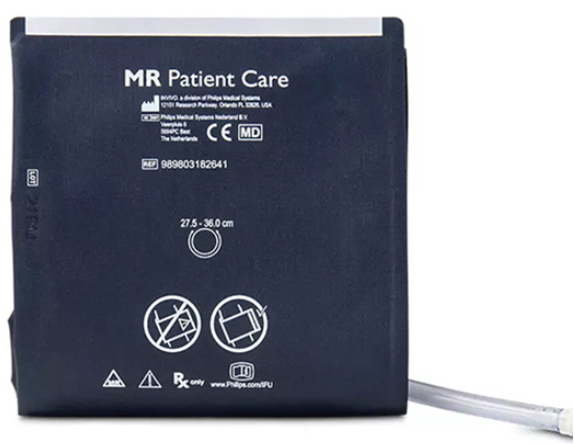
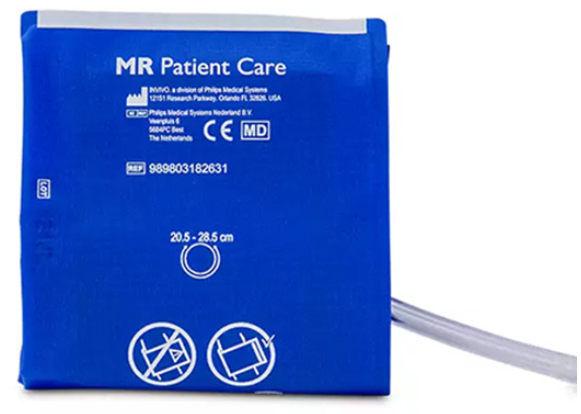
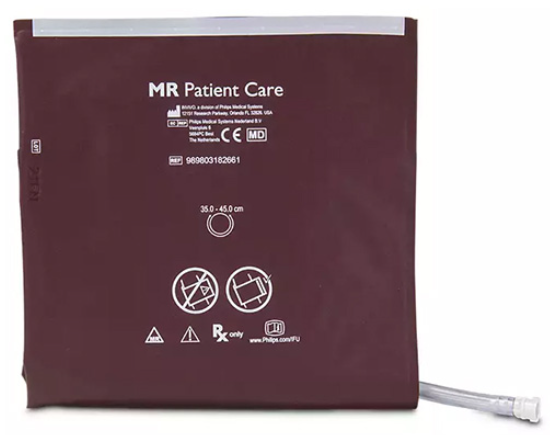
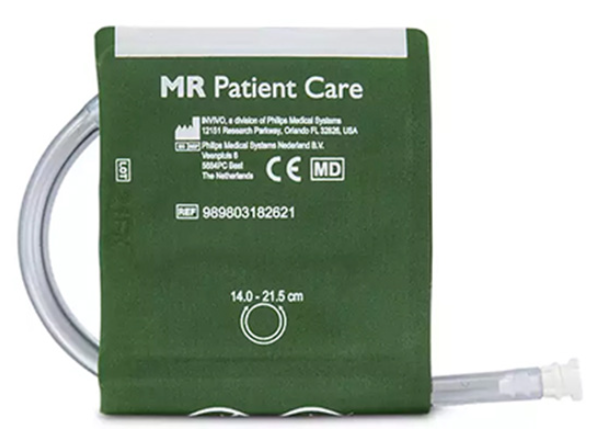
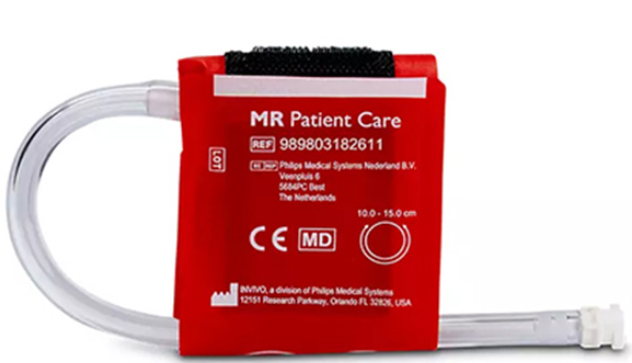
The range of available cuff options allows MRI departments to confidently monitor patients across virtually every clinical application, ensuring that appropriate equipment is available regardless of patient size or age.
At Imaging Solutions, we supply a comprehensive range of MRI-compatible NIBP cuff sizes to support a wide variety of patient populations. With 13 disposable cuff sizes and 5 reusable cuff sizes available, clinicians have access to a total of 18 cuff options, helping ensure the correct cuff can be selected to support accurate blood pressure measurement and optimal patient care.
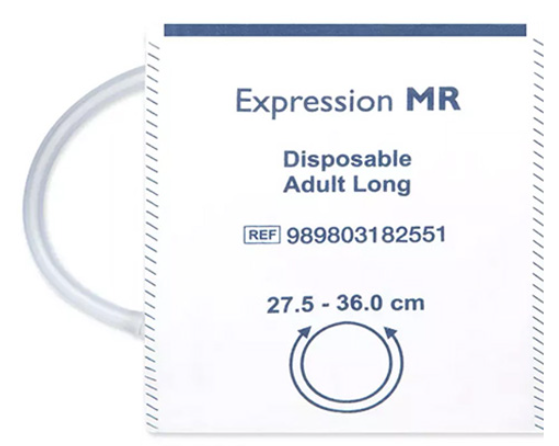
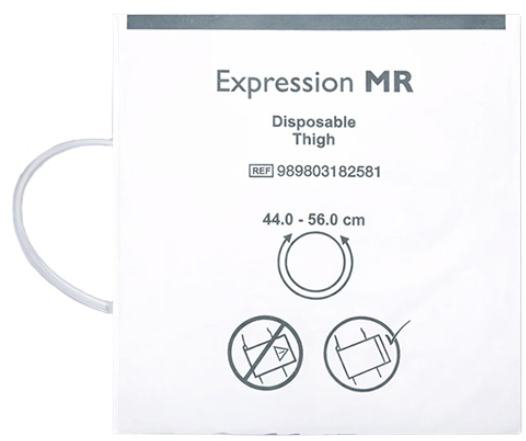
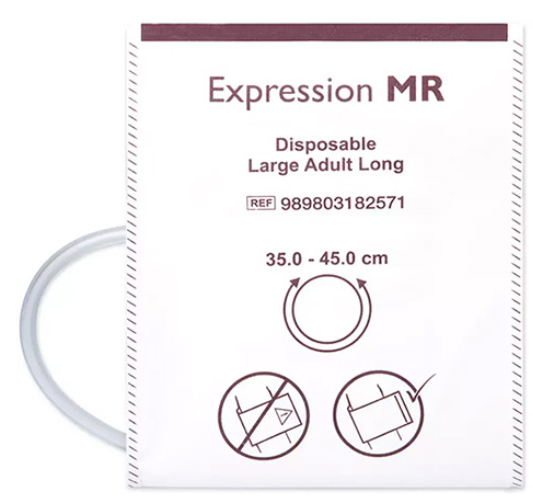
You can view the full range on the IMGDirect website.
Selecting the Correct Cuff Size
Each cuff includes markings that indicate the recommended limb circumference range for that cuff size. To obtain accurate blood pressure measurements, clinicians should select a cuff that is appropriate for the patient’s limb circumference.
When applying the cuff, the index line should fall within the range markings printed on the cuff. This provides a visual confirmation that the selected cuff size is appropriate for the patient and helps support accurate blood pressure measurement.
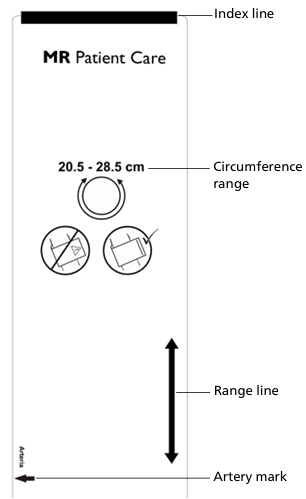
Reusable and Disposable Cuff Options
The MR400 supports both reusable and disposable cuff configurations to accommodate different clinical requirements and infection-control protocols.
Disposable cuffs are intended for single-patient use and should not be reused.
Reusable cuffs are designed for multiple-patient use; however, they should be cleaned and disinfected in accordance with facility protocols and the manufacturer’s recommendations before use and between patients.
Regardless of cuff type, all cuffs connect to the MR400 using the appropriate NIBP Pressure Interconnect Hose.
NIBP Pressure Hose and Connection System
The MR400 blood pressure system utilises proprietary NIBP pressure hoses designed specifically for MRI use. These pressure hoses incorporate a secure single-lumen connection system that connects the blood pressure cuff to the monitoring unit.
To support different patient populations, Philips provides two NIBP pressure hose configurations:
- Standard Adult NIBP Pressure Interconnect Hose
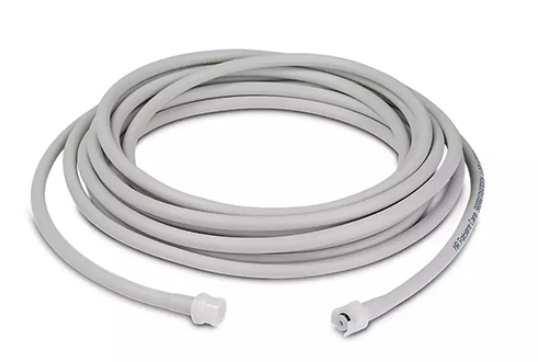
- Neonatal NIBP Pressure Interconnect Hose
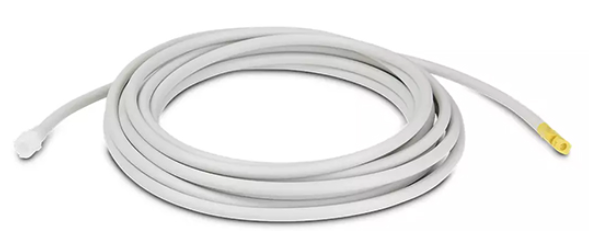
While both pressure hoses perform the same basic function of connecting the blood pressure cuff to the MR400, the Neonatal Pressure Interconnect Hose is specifically designed for use with neonatal cuffs and applications. This helps ensure appropriate pressure delivery during the blood pressure measurement cycle, supporting both patient safety and measurement accuracy in neonatal monitoring.
The Neonatal Pressure Interconnect Hose can be easily identified by its yellow flange connector, which is designed to be compatible only with the neonatal cuff range. This visual distinction helps clinicians quickly identify the correct hose and cuff combination while reducing the risk of incompatible accessories being connected.
The connection system is designed to provide a reliable seal, preventing air leaks that could compromise measurement accuracy. During a blood pressure cycle, maintaining a stable air pathway between the monitor and cuff is essential to ensure accurate inflation, deflation, and pressure measurement.
Using the correct pressure hose and cuff combination for the selected patient population helps optimise monitoring performance while reducing the likelihood of interrupted or failed blood pressure measurements.
The Importance of Patient Type Selection
Before initiating NIBP monitoring, it is important to ensure that the correct patient category has been selected on the MR400.
The MR400 allows users to select from three patient types:
Available Patient Categories
- Neonatal
- Paediatric
- Adult
This setting directly influences how the monitor performs blood pressure measurements by adjusting factors such as inflation pressure limits and measurement algorithms to suit the selected patient population.
Selecting the correct patient category is important for both patient comfort and measurement accuracy. An inappropriate patient setting may result in unnecessary cuff inflation pressure or inaccurate readings.
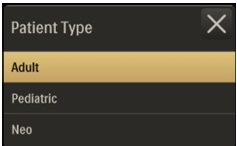
As part of routine setup, users should always verify that the selected patient type matches the patient being monitored.
Performing a Single NIBP Measurement
Obtaining a one-off blood pressure reading on the MR400 is designed to be simple and intuitive.
Once the blood pressure cuff and tubing have been connected correctly and the appropriate patient type has been selected, a single measurement can be initiated directly from the touchscreen interface.
The NIBP Start/Stop button is located within the quick-access controls at the top of the display. Pressing this button begins an immediate blood pressure measurement cycle.
The monitor will automatically inflate the cuff, perform the measurement, and display the systolic pressure, diastolic pressure, and Mean Arterial Pressure (MAP) once the cycle is complete.
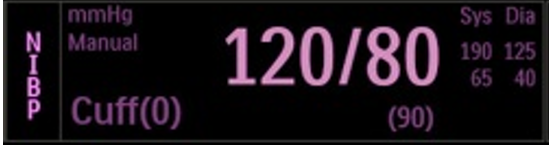
These values provide clinicians with valuable insight into cardiovascular function and can be used to assist with both immediate clinical assessment and ongoing patient monitoring throughout the MRI examination.
Automatic Cycling NIBP Monitoring
While one-off measurements are useful, many clinical situations require blood pressure to be monitored at regular intervals throughout an examination.
To support this, the MR400 includes an Automatic Cycling feature that allows blood pressure measurements to occur automatically at user-defined intervals.
Automatic cycling helps ensure that patient blood pressure is monitored consistently without requiring manual intervention from clinical staff.
This feature is particularly valuable during:
Common Applications for Automatic Cycling
- Long MRI examinations
- Sedation procedures
- High-dependency patient monitoring
- Continuous patient observation requirements
Once enabled, the MR400 will automatically initiate blood pressure measurements according to the selected interval schedule.
Configuring Automatic Cycling
The interval between automatic blood pressure measurements can be configured directly from the monitor.
Users can adjust the interval through either:
Configuration Methods
- The dedicated Interval button located next to the NIBP Start/Stop control.
- The settings available within the NIBP parameter menu.
To enable automatic cycling, press the NIBP parameter box located on the main monitoring screen. This opens the NIBP settings menu.
Within this menu, a setting labelled Auto Mode can be found. Selecting this option enables automated blood pressure monitoring and allows the chosen interval schedule to begin.
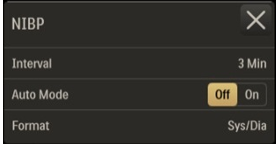
Once activated, the monitor will continue performing blood pressure measurements automatically until the feature is disabled or monitoring is stopped.
Automatic Blood Pressure Cycling Status and Visual Feedback
A useful feature of the MR400 automatic cycling function is the monitoring status information displayed directly within the NIBP parameter box.
When Automatic Cycling is enabled, the monitor displays both the configured measurement interval and the elapsed time since the last blood pressure measurement was completed. This allows clinicians to quickly confirm that automatic monitoring is active and operating as expected.
By providing immediate visibility of the monitoring schedule, users can easily verify the selected interval setting and determine when the previous measurement occurred without navigating through additional menus.
This information is particularly valuable during lengthy MRI examinations and continuous patient monitoring applications, helping clinicians maintain awareness of blood pressure monitoring activity throughout the procedure.
Automatic Trend Recording
The MR400’s NIBP functionality extends beyond simple blood pressure measurement.
When automatic cycling is enabled, blood pressure readings can also be incorporated into the monitor’s trending and data recording features.
Through the Trends menu, users can configure the system to automatically record physiological information at specified intervals, including readings associated with each blood pressure measurement cycle.
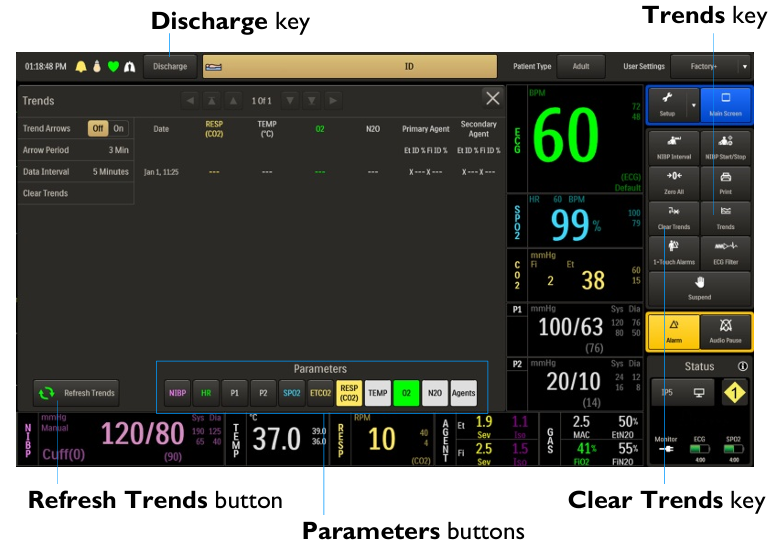
This functionality allows clinicians to build a historical record of patient vital signs throughout the examination, providing valuable information for clinical review and patient management.
Trend recording can assist in identifying gradual physiological changes that may not be immediately apparent from viewing individual readings in isolation.
When combined with automatic blood pressure cycling, trending can provide a useful overview of how a patient’s cardiovascular status changes over time. This can be particularly valuable during lengthy examinations or when monitoring patients who may be at risk of physiological instability.
The comprehensive trending capabilities of the MR400 will be explored in greater detail in a future article.
Conclusion
The Philips MR400 Non-Invasive Blood Pressure monitoring system provides a reliable and flexible method of assessing patient blood pressure throughout MRI examinations. Through the use of MRI-compatible cuffs, dedicated tubing systems, configurable patient settings, and automated monitoring functionality, the MR400 enables clinicians to obtain accurate blood pressure measurements while maintaining the safety requirements of the MRI environment.
Whether performing a single assessment before a scan or continuously monitoring a patient throughout a lengthy imaging procedure, the system provides valuable haemodynamic information that contributes to informed clinical decision-making.
Features such as Automatic Cycling, configurable measurement intervals, on-screen monitoring status information, and integrated trending capabilities further enhance the monitoring experience by helping clinicians maintain continuous visibility of patient condition throughout the examination.
Understanding how the MR400 NIBP system operates, together with the importance of appropriate cuff selection and patient configuration, allows clinical users to maximise measurement accuracy while supporting both patient safety and workflow efficiency within the MRI suite.
Philips MR400 NIBP Monitoring FAQs
1. Why must MRI-compatible blood pressure cuffs be used with the Philips MR400?
The MRI environment contains powerful magnetic fields that require all patient monitoring accessories to be specifically designed for MRI use. Philips MRI-compatible blood pressure cuffs are engineered for safe operation within the MRI suite and are clearly marked with MRI compatibility indicators.
Many conventional blood pressure cuffs contain metal clips, metal components, or conductive materials within the cuff construction that may not be suitable for use within the MRI environment. Using approved MRI-compatible accessories helps maintain patient safety, supports MRI safety compliance, and ensures reliable blood pressure measurements throughout the examination.
2. What cuff sizes are available for the Philips MR400 NIBP system?
The Philips MR400 supports a comprehensive range of MRI-compatible blood pressure cuffs suitable for neonatal, paediatric, and adult patients. Available cuff options include:
Reusable Cuff Sizes
- Infant: 10.0 – 15.0 cm
- Paediatric: 14.0 – 21.5 cm
- Small Adult: 20.5 – 28.5 cm
- Adult: 27.5 – 36.0 cm
- Large Adult: 35.0 – 45.0 cm
Disposable Cuff Sizes
- Neonatal Size 1: 3.1 – 5.7 cm
- Neonatal Size 2: 4.3 – 8.0 cm
- Neonatal Size 3: 5.8 – 10.9 cm
- Neonatal Size 4: 7.1 – 13.1 cm
- Infant Size 5: 10.0 – 15.0 cm
- Infant: 10.0 – 15.0 cm
- Paediatric: 14.0 – 21.5 cm
- Small Adult: 20.5 – 28.5 cm
- Adult: 27.5 – 36.0 cm
- Adult Long: 27.5 – 36.0 cm
- Large Adult: 35.0 – 45.0 cm
- Large Adult Long: 35.0 – 45.0 cm
- Thigh: 44.0 – 56.0 cm
Using the correct cuff size is essential for obtaining accurate blood pressure measurements. The MR400 cuff range, combined with Adult and Neonatal Pressure Interconnect Hose options, provides a monitoring solution suitable for virtually every patient population encountered within the MRI environment.
3. Why is selecting the correct patient type important before taking a blood pressure measurement?
Before performing NIBP monitoring, users should select the appropriate patient category: Neonatal, Paediatric, or Adult. This setting adjusts the monitor’s measurement algorithms and inflation pressure limits to suit the patient population. Selecting the correct patient type helps improve measurement accuracy, enhances patient comfort, and reduces the risk of unnecessarily high cuff inflation pressures.
4. Can the MR400 perform automatic blood pressure measurements during an MRI examination?
Yes. The MR400 includes an Automatic Cycling feature that allows blood pressure measurements to be performed automatically at predefined intervals. This is particularly useful during longer MRI procedures, sedation cases, and situations requiring continuous patient monitoring.
Once Automatic Cycling is enabled, the monitor continues taking measurements according to the selected interval schedule until the feature is disabled. The NIBP parameter box displays both the configured measurement interval and the elapsed time since the last blood pressure measurement, allowing clinicians to confirm that automatic monitoring is active and functioning correctly throughout the examination.